

How Guardacard Works
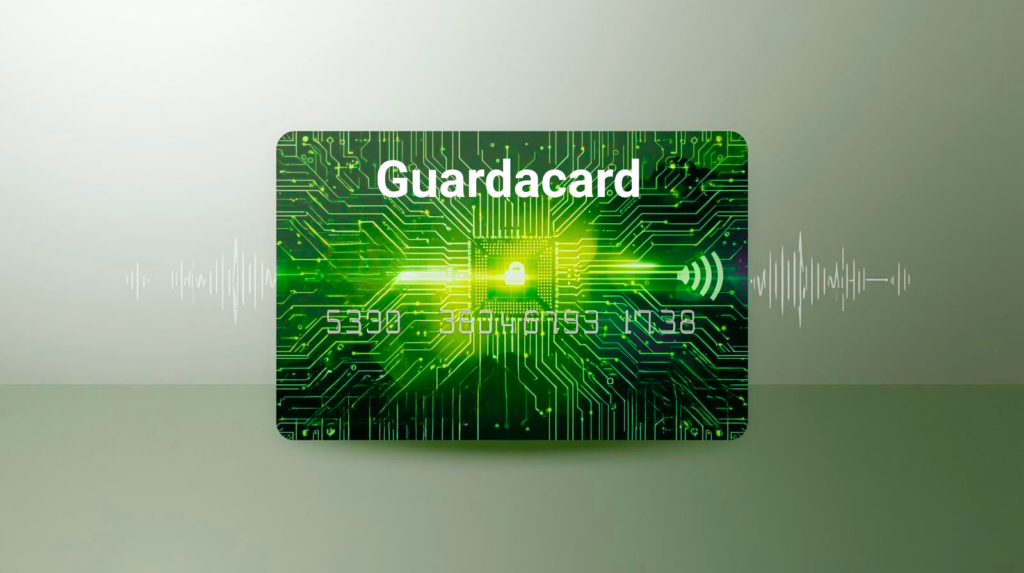
How Guardacard Blocks RFID/NFC Skimming Across 125 kHz–134 kHz and 13.56 MHz
In a world where contactless cards and credentials are ubiquitous (from building access badges and FOBs to payment cards), criminals have developed methods to intercept and skim data from them. They can use this data to replicate the card , to build a new identity, as part of stealing your identity (& Money), or for use in a Scam where they get the benefit and you spend months sorting out the mess. RFID and NFC skimming attacks exploit the fact that many cards and credentials respond to radio frequency requests without direct contact. Guardacard technology has been developed as a proactive defence against these threats, offering robust blocking of unauthorized reads across the two most common frequency ranges used in contactless systems: low-frequency (LF) 125 kHz–134 kHz and high-frequency (HF) 13.56 MHz.
Guardacard is the only card on the market that protects both sets of frequencies; many of the low-end cards only use the 13.56 frequency and don’t energise efficiently, allowing skimmers to still read or partially read your data.
The Threat Landscape: Skimming Across Dual Bands
Contactless systems operate broadly in two frequency bands:
125 kHz–134 kHz (Low Frequency / LF): Used in many access control systems and proximity credentials.
13.56 MHz (High Frequency / HF): Used for NFC mobile interactions, smart cards, and modern payment and travel cards.
Criminals deploy portable readers that emit a radio signal in these bands to illicitly activate and read data from unsuspecting cards in a wallet or pocket. These skimming devices are often compact and can be used in crowded places to harvest data from nearby cards without physical contact. These devices have evolved over the last 12 months to operate over longer ranges, up to 20 meters. What this has meant in the skimming field is that although your card may be designed to just work in the 5 to 10 cm range, with a higher directed signal, your data can be read from further away sometimes up to several meters.
Why Simple Shields Aren’t Enough
Traditional RFID blockers rely on passive metal shields or Faraday cage concepts: a metal layer that disrupts radio waves. While this can work in some cases, such solutions have important limitations:
Frequency specificity: Many metal shields are not tuned for frequency and do not block both LF and HF effectively.
Single Card Blocking: Many are just metal-lined jackets that attempt protect one card only and need to be removed for you to use the card
Passive blocking only: They don’t intelligently interact with radio signals — they either block all signals (sometimes including legitimate reads) or fail against more sophisticated skimmers.
Lack of discrimination: They can’t distinguish between authorised readers (like legitimate access points or payment terminals) and unauthorised ones.
Why Simple Chips Aren’t Enough
Traditional RFID Chip blockers either only block the main range for Credit Cards and Debit cards, or they reply to a send request with a non-logical set of data from the supposed “blocking card” (Whilst the other cards in your possession still can be read and send their data… not a great idea…). While this can work in some cases, such solutions have important limitations as outlined below:
Frequency specificity: Many Chip blockers are tuned to a particular frequency and may not block both LF and HF effectively. That is, they will block say 125 kHz, and not the rest of the range from 125.1 kHz to 135.9 kHz
Interference blocking only: They don’t intelligently interact with radio signals — they just send a “Non Logical” response to a signal enquiry or fail against more sophisticated skimmers.
Lack of discrimination: They RFID blockers can’t distinguish between authorised readers (like legitimate access points or payment terminals) and unauthorised ones.
Guardacard took a fundamentally different approach.
Guardacard’s Microprocessor-Driven Defence
At the heart of Guardacard are two customised microprocessor chip sets paired with patented multi-band signal handling technology. Rather than simply attempting to block all radio waves with a static shield, Guardacard actively engages with radio signals in a smart, frequency-aware way.
How It Works
Dual-Band Signal Recognition
Guardacard’s chip is tuned to both key contactless frequencies:
Low Frequency: 125 kHz–134 kHz
High Frequency: 13.56 MHz
Instead of treating radio waves generically, it recognises when a reader’s signal matches one of these bands and instantly blocks that signal.
Intelligent Engagement Rather Than Passive Blocking
When a skimming device emits a radio frequency to attempt to power and read a nearby card, the Guardacard chip detects the signal and responds in a controlled manner. Because it’s a microprocessor powered by the incoming signal, it can generate tailored counter-responses that effectively block the attempted reading signal
This prevents the skimming device from successfully accessing or reading any card data that is within up to 5cm of either side of the Guardacard.
Adaptive Response Patterns
- Guardacard’s microprocessor can adjust its response patterns depending on signal strength, frequency, and modulation type.
- This adaptive behaviour means it can contend with a broader range of low-quality or high-powered skimming attempts that defeat simpler shielding solutions.
Advantages Over Traditional Blocking Solutions
| Feature | Traditional Metal Shield | Guardacard Microprocessor Approach |
|---|---|---|
| Dual-band Protection | Limited, often frequency-dependent | Designed to protect both LF ~125 kHz and HF ~13.56 MHz |
| Active Defense | No — passive blocking only | Yes — actively engages with signals to neutralise skimming attempts |
| Discrimination | No — blocks everything | Yes — allows legitimate reads and blocks unauthorized ones |
| Adaptive to Skimming Techniques | No | Yes — dynamic response patterns |
| Impact on Legitimate Use | Can interfere | Designed to permit legitimate operation |
Real-World Benefits
Enhanced Security
Guardacard doesn’t just make skimming harder — it fundamentally prevents unauthorised communication. By actively negating skimmer attempts at both widely used contactless frequency sets, it significantly removes the risk of data theft through unauthorised reading.
Seamless User Experience
Unlike metallic shields that can let skimmers through, Guardacard’s intelligent chip truly blocks unauthorised readers, using patented technology and processes, allowing you to feel assured when using and carrying your cards and phone.
Future-Ready Security
As contactless technologies evolve, skimming techniques adjust too. The microprocessor-based model provides a platform that can be updated and tuned, rather than static hardware that quickly becomes outdated.
Guardacard’s unique security solution redefines how RFID/NFC blocking should work. Instead of relying on simplistic passive shielding, it uses patented purpose-built microprocessor chips and patented signal response technology to detect, engage, and neutralize unauthorized scanning attempts across both low and high contactless frequency bands. The result is a flexible, smart, and user-friendly defence against skimming threats — protecting your cards, phones, credentials, and digital identity without compromising convenience.